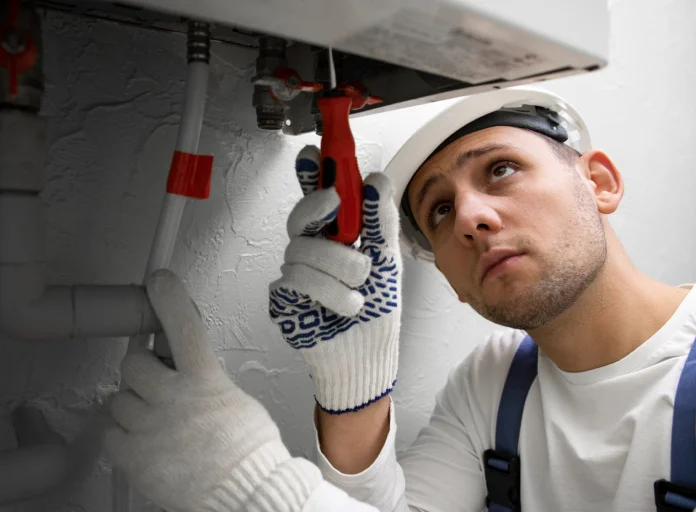
When your boiler stops working properly, it can quickly throw your home into chaos — no hot water, no heating, and plenty of stress. The good news? Most boiler problems have simple explanations, and spotting the early warning signs can prevent bigger (and more expensive) issues later.
At Lock & Lindfield, our Gas Safe registered engineers have years of experience diagnosing and repairing all types of boiler faults across West Sussex.
Here are the most common boiler problems we encounter — and how to recognise what might be going wrong before you call in the experts.
1. No Heat or Hot Water
This is the most obvious — and frustrating — issue homeowners face.
Possible causes:
- Low pressure
- Faulty thermostat
- Broken diaphragm or airlock
- Problems with the motorised valve
How to diagnose:
Check your boiler’s pressure gauge. If it’s below 1 bar, repressurising the system (following the manufacturer’s instructions) may help. If pressure is normal and the issue continues, call a Gas Safe engineer to investigate.
Need help fast? Our boiler repair service in West Sussex is here to get you back up and running.
2. Boiler Keeps Losing Pressure
If your boiler repeatedly loses pressure, it’s a sign something isn’t right within the system.
Possible causes:
- Water leak in the heating system
- Faulty pressure relief valve
- Radiator bleed issues
How to diagnose:
Check for visible leaks around radiators, pipework, or the boiler itself. If you can’t find one, it could be an internal problem. Avoid constantly topping up the system — it’s a short-term fix that can worsen the issue.
Regular boiler servicing helps spot and prevent pressure-related faults early.
3. Strange Noises (Banging, Whistling, or Gurgling)
Your boiler should run quietly. If it starts sounding like a kettle or clanking pipework, there’s a problem.
Possible causes:
- Air trapped in the system
- Limescale build-up on the heat exchanger
- Failing pump or low water flow
How to diagnose:
If you live in a hard-water area, “kettling” could be the culprit — mineral deposits cause hot spots and boiling sounds. A professional power flush may be needed to clear the system.
4. Pilot Light Keeps Going Out
If your pilot light won’t stay lit, it could be a simple issue — or a sign of a serious fault.
Possible causes:
- Faulty thermocouple
- Gas supply issues
- Flue draughts blowing out the flame
How to diagnose:
Check that your gas supply is working elsewhere in the home. If it is, don’t attempt to relight the pilot repeatedly — contact a Gas Safe registered engineer for inspection.
5. Leaks Around the Boiler
Any visible leaking water or damp patches near your boiler are cause for concern.
Possible causes:
- Corroded pipes or seals
- Faulty pressure valve
- Pump seal failure
How to diagnose:
Turn off your heating and contact a professional immediately. Even small leaks can damage electrical components or cause corrosion inside the boiler casing.
6. Radiators Not Heating Evenly
If some radiators are cold at the top or bottom, it’s usually a sign of trapped air or sludge in the system.
Possible causes:
- Air in the radiators
- Sludge build-up restricting flow
How to diagnose:
Bleed your radiators using a radiator key. If the problem persists, your system may need a power flush to restore proper circulation.
7. Thermostat or Timer Faults
Sometimes the issue isn’t the boiler — it’s the control system.
Possible causes:
- Outdated thermostat
- Incorrect settings or time schedule
- Weak batteries in wireless controls
How to diagnose:
Check the display and settings. If your thermostat is old or unreliable, upgrading to a smart thermostat can improve efficiency and temperature accuracy.
Frequently Asked Questions
Can I fix a boiler problem myself?
You can safely check the pressure gauge or thermostat, but never open the boiler casing. Always call a Gas Safe engineer for internal repairs.
What’s the most common boiler problem in winter?
Frozen condensate pipes are a frequent issue. Insulating the pipe or gently thawing it with warm water can help, but never use boiling water.
How do I prevent boiler problems?
Annual boiler servicing is the best prevention. It keeps your system efficient, safe, and under warranty.
Why is my boiler making a whistling noise?
That “kettling” sound usually means limescale has built up on the heat exchanger. A power flush or descaling may be needed.
When should I replace my boiler instead of repairing it?
If your boiler is over 10–15 years old or keeps breaking down, a new boiler installation will likely be more efficient and cost-effective.
Conclusion
Boiler problems can range from small annoyances to serious safety risks. Understanding the early signs helps you act quickly — before a breakdown leaves you without heat or hot water.
At Lock & Lindfield, we’re proud to be trusted boiler engineers in West Sussex, offering reliable repairs, servicing, and installations with clear pricing and professional service.
Contact us today to book your boiler inspection or schedule your service online to keep your heating system in perfect condition.