There’s nothing quite like the sinking feeling when you glance at your boiler and see an unfamiliar error code flashing on the display. Whether it’s a cryptic combination of letters and numbers or a blinking fault light, your boiler is trying to tell you something—but without a translation, that message is frustratingly unclear.
Boiler error codes are your heating system’s way of communicating specific faults. Rather than simply failing silently, modern boilers diagnose problems and display codes that help engineers quickly identify issues. Understanding what these codes mean can help you determine whether you’re facing a simple reset situation or something requiring professional attention.
For homeowners across West Sussex, this comprehensive guide decodes the most common error codes from major boiler brands including Worcester Bosch, Vaillant, Ideal, Baxi, and others. We’ll explain what each code typically indicates, whether you can safely attempt any fixes yourself, and when to call a Gas Safe registered engineer.
While this guide covers the most frequently encountered codes, remember that your boiler manual contains the definitive reference for your specific model. When in doubt—particularly with any gas-related concerns—always err on the side of caution and contact a qualified professional.
Understanding How Boiler Error Codes Work
Before diving into specific codes, understanding how these diagnostic systems function helps you respond appropriately.
Why Boilers Display Error Codes
Modern boilers contain sophisticated electronic control systems that continuously monitor dozens of parameters:
- Gas pressure and flow
- Water temperature and pressure
- Flue gas composition
- Ignition success
- Flame presence
- Pump operation
- Sensor readings
- Safety device status
When any reading falls outside acceptable parameters, the boiler’s PCB (printed circuit board) identifies the issue, displays a corresponding code, and often initiates a safety lockout to prevent damage or danger.
Types of Error Indications
Different boilers display errors differently:
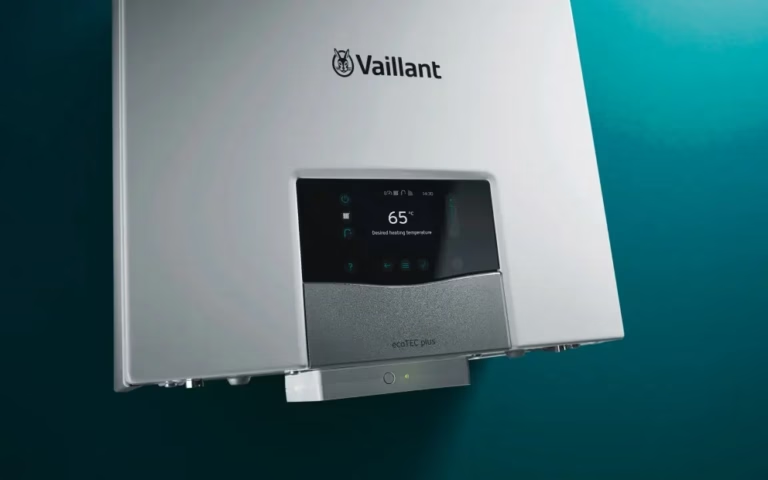
Digital Display Codes: Most modern boilers show alphanumeric codes on a digital screen (e.g., “EA”, “F28”, “L2”).
LED Fault Lights: Some boilers use flashing LED patterns or coloured lights to indicate faults.
Numbered Fault Codes: Certain manufacturers use simple numbered systems (e.g., “Fault 1”, “Fault 2”).
Combination Systems: Some boilers display both a code and descriptive text.
Lockout vs Blocking
Understanding the difference helps determine appropriate response:
Soft Lockout (Blocking):
- Temporary shutdown
- Boiler may retry automatically
- Often clears without intervention
- Usually indicates intermittent issue
Hard Lockout:
- Complete shutdown until manually reset
- Requires user intervention to restart
- Indicates more significant fault
- May recur if underlying issue unresolved
The Reset Process
Most lockouts can be cleared by resetting the boiler:
Typical Reset Methods:
- Reset button: Press and hold dedicated reset button for 3-5 seconds
- Control dial: Turn to reset position momentarily
- Power cycle: Switch off at electrical supply, wait 30 seconds, switch back on
Important: If a boiler requires repeated resets or immediately displays the same code after resetting, the underlying fault remains. Continuing to reset without addressing the cause can worsen problems. If the same code appears more than twice, contact an engineer.
Worcester Bosch Error Codes
Worcester Bosch is the UK’s most popular boiler brand. Here are their most common error codes.
EA (EA 227, EA 229) – Ignition Fault
What It Means: The boiler has attempted to ignite but failed to detect a flame. This is one of the most common Worcester Bosch error codes.
Possible Causes:
- No gas supply to boiler
- Frozen condensate pipe
- Faulty ignition electrode
- Gas valve malfunction
- Blocked flue or air intake
- PCB fault
What You Can Try:
- Check other gas appliances work (confirms gas supply)
- Check prepayment meter has credit (if applicable)
- Check condensate pipe for ice (winter months)
- Reset the boiler once
When to Call an Engineer: If gas supply is confirmed, condensate isn’t frozen, and reset doesn’t clear the fault—or if it recurs after reset.
Severity: Medium to High
A1 (or blue flashing light) – Low Water Pressure
What It Means: System pressure has dropped below minimum operating level (typically below 0.5 bar).
Possible Causes:
- Natural pressure loss over time
- Recent radiator bleeding
- Leak in heating system
- Faulty pressure relief valve
- Expansion vessel failure
What You Can Try:
- Check pressure gauge reading
- Repressurise system using filling loop to 1.0-1.5 bar
- Reset boiler
- Monitor pressure over following days
When to Call an Engineer: If pressure drops repeatedly (more than once monthly), you have a leak requiring professional diagnosis through boiler repairs.
Severity: Low (if one-off), Medium (if recurring)
C6 (C6 224) – Fan Fault
What It Means: The boiler’s fan isn’t operating correctly. The fan must run to safely expel combustion gases before ignition can occur.
Possible Causes:
- Fan motor failure
- Wiring or connection issue
- PCB fault
- Blocked flue restricting fan
- Air pressure switch malfunction
What You Can Try:
- Reset the boiler once
- Listen for fan running when boiler attempts to start
When to Call an Engineer: This code almost always requires professional repair. The fan is a critical safety component—don’t attempt DIY fixes.
Severity: High
D5 – Temperature Sensor Fault
What It Means: The boiler’s NTC temperature sensor is reading incorrectly or has failed completely.
Possible Causes:
- Faulty NTC sensor
- Wiring connection issue
- PCB fault
- Sensor reading out of range
What You Can Try:
- Reset the boiler
When to Call an Engineer: Sensor faults require professional diagnosis and replacement.
Severity: Medium
E9 (E9 224) – Safety Temperature Limit
What It Means: The boiler has overheated and triggered the safety cutout to prevent damage.
Possible Causes:
- Circulation problem (pump failure, blockage)
- System sludge restricting flow
- Faulty safety thermostat
- Air lock in system
- Failed thermistor
What You Can Try:
- Allow boiler to cool completely (30+ minutes)
- Check radiators for cold spots (indicates circulation issue)
- Reset boiler
When to Call an Engineer: Overheating indicates a serious underlying issue. If this code appears, professional diagnosis is essential.
Severity: High
Additional Worcester Bosch Codes Quick Reference
| Code | Meaning | DIY Possible? |
|---|---|---|
| A1 | Low water pressure | Yes – repressurise |
| C1 | Fan speed incorrect | No – call engineer |
| C6 | Fan fault | No – call engineer |
| CE | Low water pressure (older models) | Yes – repressurise |
| D1 | Safety thermostat fault | No – call engineer |
| D5 | Flow sensor fault | No – call engineer |
| E2 | Flow thermistor fault | No – call engineer |
| E5 | Return thermistor fault | No – call engineer |
| E9 | Safety limit activated | No – call engineer |
| EA | No flame detected | Try reset; likely needs engineer |
| F7 | Flame detected when off | No – call engineer immediately |
| H7 | Pump fault | No – call engineer |
Vaillant Error Codes
Vaillant boilers use an “F” prefix for most fault codes.
F22 – Low Water Pressure
What It Means: System pressure has dropped too low for safe boiler operation.
Possible Causes:
- Natural pressure loss
- Recent bleeding of radiators
- Leak in system
- Pressure sensor fault
- Filling loop not closed properly
What You Can Try:
- Check pressure gauge (should read 1.0-1.5 bar when cold)
- Repressurise using filling loop
- Reset boiler
- Check filling loop is fully closed
When to Call an Engineer: If pressure drops repeatedly, indicating a leak.
Severity: Low (if one-off), Medium (if recurring)
F28 – Ignition Failure
What It Means: The boiler has failed to ignite after multiple attempts.
Possible Causes:
- No gas supply
- Frozen condensate pipe
- Faulty ignition transformer
- Gas valve fault
- Blocked burner
- Flue blockage
What You Can Try:
- Check gas supply to other appliances
- Inspect condensate pipe for ice
- Reset boiler once
When to Call an Engineer: If gas supply is present, condensate isn’t frozen, and fault persists after reset.
Severity: Medium to High
F29 – Flame Loss During Operation
What It Means: The boiler ignited successfully but flame was lost during operation.
Possible Causes:
- Gas supply interruption
- Flue blockage (possibly wind-related)
- Faulty flame sensor
- Gas valve intermittent fault
- Condensate blockage
What You Can Try:
- Reset boiler
- Check if windy conditions (temporary flue issue)
- Monitor for recurrence
When to Call an Engineer: If fault recurs frequently, professional diagnosis is needed.
Severity: Medium
F75 – Pressure Sensor/Pump Fault
What It Means: The boiler cannot detect a pressure rise when the pump activates—either the pump isn’t working or the sensor has failed.
Possible Causes:
- Pump failure or seizure
- Pump airlock
- Blocked pump
- Faulty pressure sensor
- Low system pressure
- Wiring fault
What You Can Try:
- Check system pressure (repressurise if low)
- Reset boiler
- Listen for pump operation
When to Call an Engineer: This code usually indicates pump or sensor failure requiring professional repair.
Severity: High
F27 – Flame Simulation Fault
What It Means: The boiler is detecting flame when there shouldn’t be one—a potentially dangerous condition.
Possible Causes:
- Faulty flame sensing electrode
- Moisture in combustion chamber
- PCB fault
What You Can Try: Nothing—do not attempt any fixes.
When to Call an Engineer: Immediately. This is a safety-critical fault. Do not reset repeatedly.
Severity: Very High
Additional Vaillant Codes Quick Reference
| Code | Meaning | DIY Possible? |
|---|---|---|
| F00/F0 | Sensor fault | No – call engineer |
| F10 | Flow temperature sensor short | No – call engineer |
| F20 | Overheat protection activated | Try reset; likely needs engineer |
| F22 | Low water pressure | Yes – repressurise |
| F24 | Temperature rise too fast | No – call engineer |
| F25 | Temperature too high | No – call engineer |
| F27 | Flame detected incorrectly | No – call engineer immediately |
| F28 | Ignition failure | Try reset; may need engineer |
| F29 | Flame lost during operation | Try reset; may need engineer |
| F32 | Fan fault | No – call engineer |
| F49 | eBUS voltage fault | No – call engineer |
| F61 | Gas valve fault | No – call engineer |
| F62 | Gas valve delay fault | No – call engineer |
| F63 | EEPROM fault | No – call engineer |
| F75 | Pump/sensor fault | Try reset; likely needs engineer |
Ideal Boiler Error Codes
Ideal boilers typically use “F” or “L” prefix codes.
F1 (or L1) – Low Water Pressure
What It Means: System pressure has fallen below operational minimum.
Possible Causes:
- Normal pressure loss
- Leak in system
- Recently bled radiators
- Pressure relief valve discharge
What You Can Try:
- Check pressure gauge
- Repressurise to 1.0-1.5 bar
- Reset boiler
When to Call an Engineer: If pressure drops repeatedly.
Severity: Low (if one-off), Medium (if recurring)
F2 (or L2) – Flame Loss/Ignition Fault
What It Means: The boiler cannot establish or maintain a flame.
Possible Causes:
- No gas supply
- Frozen condensate
- Ignition failure
- Gas valve fault
- Flue blockage
What You Can Try:
- Verify gas supply
- Check condensate pipe for ice
- Reset boiler
When to Call an Engineer: If gas supply confirmed and fault persists.
Severity: Medium to High
F4 (or L5) – Fan Fault
What It Means: Fan not operating correctly.
Possible Causes:
- Fan motor failure
- Connection fault
- PCB issue
- Blocked flue
What You Can Try:
- Reset boiler
When to Call an Engineer: Fan faults require professional repair.
Severity: High
F7 (or L9) – PCB Fault
What It Means: Internal electronic control board failure.
Possible Causes:
- PCB component failure
- Electrical surge damage
- Water ingress
- Age-related deterioration
What You Can Try:
- Reset boiler (rarely helps)
When to Call an Engineer: PCB faults require professional diagnosis. Replacement can be expensive (£250-400+).
Severity: High
LC – Pump Fault
What It Means: Pump not operating as expected.
Possible Causes:
- Pump seized after dormancy
- Pump motor failure
- Airlock
- Electrical fault
What You Can Try:
- Reset boiler
- Check if pump operation audible
When to Call an Engineer: Pump faults require professional repair.
Severity: High
Additional Ideal Codes Quick Reference
| Code | Meaning | DIY Possible? |
|---|---|---|
| F1/L1 | Low pressure | Yes – repressurise |
| F2/L2 | Ignition/flame fault | Try reset; may need engineer |
| F3/L3 | Fan fault | No – call engineer |
| F4/L5 | Fan speed fault | No – call engineer |
| F5/L6 | False flame | No – call engineer immediately |
| F6/L7 | Flame lost | Try reset; may need engineer |
| F7/L9 | PCB fault | No – call engineer |
| FD/C0 | Sensor fault | No – call engineer |
| LC | Pump fault | No – call engineer |
| LE | Return sensor fault | No – call engineer |
| LF | Frost protection active | Normal in winter |
Baxi Boiler Error Codes
Baxi uses various code formats depending on model age.
E119 – Low Water Pressure
What It Means: System pressure below minimum.
Possible Causes:
- Normal pressure loss
- System leak
- Radiator bleeding
What You Can Try:
- Repressurise to 1.0-1.5 bar
- Reset boiler
When to Call an Engineer: If pressure drops frequently.
Severity: Low (if one-off)
E133 – Ignition Failure
What It Means: Boiler has failed to ignite.
Possible Causes:
- No gas supply
- Frozen condensate
- Ignition components faulty
- Gas valve fault
What You Can Try:
- Check gas supply
- Inspect condensate pipe
- Reset boiler
When to Call an Engineer: If fault persists after basic checks.
Severity: Medium to High
E125 – Circulation Fault
What It Means: Water not circulating properly—temperature rising too quickly.
Possible Causes:
- Pump not working
- System blockage
- Closed valve
- Airlock
What You Can Try:
- Check all radiator valves open
- Reset boiler
When to Call an Engineer: Circulation faults usually require professional diagnosis.
Severity: High
E160 – Fan Fault
What It Means: Fan malfunction detected.
Possible Causes:
- Fan failure
- Wiring issue
- PCB fault
What You Can Try:
- Reset boiler
When to Call an Engineer: Fan faults require professional repair.
Severity: High
E168 – No Flame Signal
What It Means: Similar to ignition failure—flame not detected.
Possible Causes:
- Gas supply issue
- Ignition component failure
- Flame sensor fault
What You Can Try:
- Check gas supply
- Reset boiler
When to Call an Engineer: If fault persists after reset.
Severity: Medium to High
Additional Baxi Codes Quick Reference
| Code | Meaning | DIY Possible? |
|---|---|---|
| E109 | Circulation fault | No – call engineer |
| E110 | Overheat | No – call engineer |
| E117 | High pressure | No – call engineer |
| E118 | Low pressure | Yes – repressurise |
| E119 | Low water pressure | Yes – repressurise |
| E125 | Circulation fault | No – call engineer |
| E128 | Flame lost | Try reset; may need engineer |
| E131 | Return sensor fault | No – call engineer |
| E133 | Ignition failure | Try reset; may need engineer |
| E151 | Safety lockout | No – call engineer |
| E160 | Fan fault | No – call engineer |
| E168 | Flame fault | Try reset; may need engineer |
Other Popular Boiler Brands
Glow-worm Error Codes
| Code | Meaning | DIY Possible? |
|---|---|---|
| F1 | Low water pressure | Yes – repressurise |
| F3 | Fan speed fault | No – call engineer |
| F4 | Ignition failure | Try reset; may need engineer |
| F9 | Gas valve fault | No – call engineer |
| F11 | Flame lost | Try reset; may need engineer |
| F13 | Return sensor fault | No – call engineer |
| F14 | Flow sensor fault | No – call engineer |
| F22 | False flame | No – call engineer |
Alpha Boiler Error Codes
| Code | Meaning | DIY Possible? |
|---|---|---|
| E10 | Ignition failure | Try reset; may need engineer |
| E20 | Flame lost | Try reset; may need engineer |
| E34 | Low pressure | Yes – repressurise |
| E41 | Low pressure sensor | No – call engineer |
| E50 | Flow sensor fault | No – call engineer |
| E65 | Fan fault | No – call engineer |
Potterton Boiler Error Codes
| Code | Meaning | DIY Possible? |
|---|---|---|
| E110 | Overheat | No – call engineer |
| E119 | Low pressure | Yes – repressurise |
| E125 | Poor circulation | No – call engineer |
| E133 | Ignition failure | Try reset; may need engineer |
| E160 | Fan fault | No – call engineer |
| E168 | Flame fault | Try reset; may need engineer |
Common Error Codes Across All Brands
Certain faults appear universally, even if codes differ by manufacturer.
Low Water Pressure Errors
Worcester: A1, CE Vaillant: F22 Ideal: F1, L1 Baxi: E118, E119 Glow-worm: F1 Alpha: E34
Universal Solution: Repressurise system using filling loop to 1.0-1.5 bar. If pressure drops repeatedly, you have a leak.
Ignition Failure Errors
Worcester: EA Vaillant: F28 Ideal: F2, L2 Baxi: E133, E168 Glow-worm: F4 Alpha: E10
Universal Checks:
- Verify gas supply working (other appliances)
- Check condensate pipe not frozen
- Reset boiler once
- Call engineer if persists
Fan Fault Errors
Worcester: C6 Vaillant: F32 Ideal: F4, L5 Baxi: E160 Glow-worm: F3 Alpha: E65
Universal Response: Reset once. If fault persists, call engineer—fan faults require professional repair.
Overheat/Circulation Errors
Worcester: E9 Vaillant: F20, F24, F25 Ideal: Various depending on model Baxi: E110, E125
Universal Response: Allow boiler to cool completely. Reset once. If fault recurs, circulation issue requires professional diagnosis.
When You Can Reset and When to Call an Engineer
Understanding which faults you can safely attempt to clear yourself versus those requiring professional help is crucial.
Safe to Attempt Reset
These situations generally allow one reset attempt:
Low Pressure Faults: After repressurising to correct level, reset is safe and expected.
Intermittent Ignition Faults: One-off ignition failures may be temporary—single reset is reasonable.
Post-Power Cut: Boilers often lock out after power interruption—reset is normal procedure.
First Occurrence of Most Codes: A single reset attempt for most codes is reasonable before calling an engineer.
When NOT to Reset
Never repeatedly reset if:
- Same code appears more than twice after resetting
- Gas smell is present
- Burning or unusual smells detected
- Visible damage to boiler
- Water actively leaking
- Any safety concerns
Call engineer immediately for:
- F27 (Vaillant) or any “false flame” error
- Overheat lockouts that recur
- Any code you don’t understand
- Boiler that won’t restart at all
- Multiple different codes appearing
The Two-Reset Rule
A practical approach for most error codes:
Reset 1: Clear the fault, observe if boiler operates normally. Reset 2: If fault returns, reset once more and monitor closely.After Reset 2: If fault appears again, stop resetting and call an engineer.
Continuing to reset beyond this point:
- Masks underlying problems
- Can cause additional damage
- Delays necessary repair
- May create safety risks
Frozen Condensate Pipe: A Special Case
One of the most common winter faults deserves special attention.
What Is the Condensate Pipe?
Modern condensing boilers produce acidic water (condensate) that must drain away. The condensate pipe—typically white plastic—runs from your boiler to a drain. If any section runs externally, it’s vulnerable to freezing in cold weather.
Symptoms of Frozen Condensate
- Ignition failure codes (EA, F28, E133, etc.)
- Gurgling sounds from boiler
- Fault appears during or after cold spell
- External pipe has visible ice
How to Thaw a Frozen Condensate Pipe
Safe DIY Fix:
- Locate the frozen section: Usually the external portion or where pipe exits the building.
- Prepare warm water: Use warm (not boiling) water—boiling water can crack frozen pipes.
- Thaw the pipe:
- Pour warm water along the frozen section
- Use a hot water bottle wrapped around the pipe
- Apply warm towels repeatedly
- Reset the boiler: Once thawed, reset should clear the fault.
- Prevent recurrence:
- Add insulation to external sections
- Consider rerouting internally (permanent solution)
When Condensate Issues Need an Engineer
- Pipe repeatedly freezes despite insulation
- Internal condensate trap blocked
- Pipe damage discovered
- Boiler continues faulting after thawing
According to Which? guidance on winter boiler problems, frozen condensate pipes account for a significant proportion of winter boiler callouts—but most can be resolved with simple thawing.
Preventing Future Error Codes
Regular maintenance dramatically reduces error code occurrences.
Annual Boiler Service
Professional boiler servicing prevents many common faults:
What Servicing Prevents:
- Ignition component deterioration
- Sensor drift and failure
- Fan and pump wear
- Blocked burners and heat exchangers
- Safety device malfunctions
Service Benefits:
- Components cleaned and adjusted
- Developing faults identified
- Efficiency optimised
- Warranty maintained
- Safety verified
Regularly serviced boilers experience up to 60% fewer breakdowns and fault codes than neglected systems.
System Maintenance
Pressure Monitoring: Check pressure monthly. Topping up before it triggers a fault prevents lockouts.
Radiator Bleeding: Regular bleeding prevents air accumulation that causes circulation faults.
System Cleanliness: Power flushing every 5-6 years removes sludge that causes overheat and circulation errors.
Magnetic Filter: Capturing debris continuously protects boiler components from damage.
Winter Preparation
Condensate Protection: Insulate external condensate pipes before winter to prevent the most common cold-weather fault.
Frost Protection: Ensure boiler frost protection is enabled if house may be unoccupied in cold weather.
System Check: Brief autumn system check confirms everything works before heating is essential.
What to Tell Your Engineer
When you do need to call for professional help, providing clear information speeds diagnosis.
Useful Information to Provide
About the Fault:
- Exact error code displayed
- When it first appeared
- What you were doing when it occurred
- Whether it’s happened before
- Any resets attempted and results
About Your Boiler:
- Make and model
- Approximate age
- When last serviced
- Any recent work done
- Previous problems experienced
About Your System:
- Any radiators not working
- Recent bleeding or pressure top-ups
- Unusual sounds before fault
- Any leaks noticed
- Changes to heating patterns
Questions to Ask
Before Booking:
- What might the fault indicate?
- What’s the likely cost range?
- How quickly can someone attend?
- What’s the callout fee?
When Engineer Arrives:
- What exactly caused the fault?
- Is this likely to recur?
- Are there related issues to address?
- How can I prevent this in future?
Frequently Asked Questions
Why does my boiler keep showing the same error code after I reset it?
Recurring error codes indicate an underlying fault that resetting doesn’t resolve. The boiler is detecting the same problem each time it attempts to operate. After two resets producing the same code, stop resetting and call a Gas Safe registered engineer. Continuing to reset can cause additional damage and won’t fix the underlying issue—the boiler is protecting itself by shutting down.
Is it safe to reset my boiler when it shows an error code?
A single reset attempt is generally safe for most error codes and is often all that’s needed for temporary faults. However, never reset if you smell gas, see flames where there shouldn’t be any, notice significant water leaks, or observe any signs of damage. Never repeatedly reset the same error code, as this masks problems. If unsure about any code, contact an engineer before attempting reset.
What does it mean if my boiler shows different error codes?
Multiple different error codes can indicate a failing component affecting several functions (like a PCB fault), intermittent electrical issues, or multiple unrelated problems developing simultaneously. This situation definitely requires professional diagnosis—multiple codes make DIY troubleshooting unreliable and suggest more complex underlying issues. Document all codes displayed and report them to your engineer.
How much does it cost to fix common boiler error codes?
Costs vary significantly depending on the fault. Pressure-related errors you fix yourself cost nothing beyond time. Simple component replacements like sensors or electrodes typically cost £80-180 including labour. Pump or fan replacements range from £150-350. PCB replacements can cost £250-450. Major repairs like heat exchanger replacement may cost £500-900. Your engineer should provide a quote before starting work.
Can I find out what my error code means without calling an engineer?
Yes—this guide covers the most common codes for major brands. Your boiler manual also contains error code explanations specific to your model. Many manufacturers provide online fault-finding resources. However, understanding what a code means doesn’t always mean you can fix it safely. Use this knowledge to determine whether professional help is needed and to communicate effectively with your engineer.
My boiler error code disappeared on its own—should I still be concerned?
Self-clearing codes indicate the fault was temporary—perhaps a brief gas pressure fluctuation or momentary sensor reading. If the boiler operates normally afterwards and the code doesn’t reappear, immediate concern is minimal. However, note when this happened and monitor for recurrence. Mention intermittent faults during your next annual service so the engineer can check relevant components. Frequent self-clearing faults suggest developing problems worth investigating.
Conclusion
Boiler error codes can be alarming, but they serve an important purpose—they’re your heating system’s way of communicating problems before they become dangerous or cause serious damage. Understanding what common codes mean helps you respond appropriately, whether that’s a simple pressure top-up you can handle yourself or recognising when professional expertise is essential.
The key principles to remember are straightforward: low pressure codes often have DIY solutions through repressurising; ignition faults may clear with a reset but may need professional attention if they recur; fan, pump, and PCB codes almost always require an engineer; and any safety-related code or gas smell demands immediate professional response.
Regular maintenance through annual boiler servicing prevents many error codes from ever appearing. A well-maintained boiler with clean components, proper settings, and protected pipes experiences far fewer faults than a neglected system. If you’re seeing error codes frequently, it may indicate your boiler needs professional attention beyond simple resets.
When you do need to call an engineer, having the error code information ready—along with details about when and how the fault occurred—speeds diagnosis and helps ensure efficient resolution.
Expert Boiler Fault Diagnosis Across West Sussex
At Lock & Lindfield, our Gas Safe registered engineers diagnose and resolve boiler faults for homeowners throughout West Sussex every day. Whatever code your boiler is displaying, we can identify the cause and provide a clear, honest assessment of what’s needed to get your heating working reliably again.
Boiler showing an error code you can’t resolve?
Contact Lock & Lindfield today for expert boiler repairs. We’ll diagnose the fault, explain the problem in plain English, and provide transparent pricing before any work begins. For preventive care that reduces future faults, our comprehensive boiler servicing keeps your system in peak condition.
Call us now or visit our services page to book your appointment. Don’t struggle with confusing error codes—let our experienced team get your heating back on track quickly and professionally.