Boiler technology has come a long way over the past decade — and it’s not slowing down. With rising energy costs, stricter environmental targets, and smarter homes becoming the norm, 2026 will bring some of the biggest changes yet in how boilers are designed, installed, and used.
At Lock & Lindfield, we stay ahead of the curve so our customers across West Sussex can make informed decisions about their heating systems — whether that’s upgrading now or planning for the future.
Here’s a clear, homeowner-friendly breakdown of the key boiler trends for 2026 and what they mean for you.
1. Hydrogen-Ready Boilers Become More Common
One of the biggest future boiler tech developments is the rise of hydrogen-ready boilers.
These systems are designed to run on natural gas today but can be converted to hydrogen in the future with minimal changes — once the UK’s hydrogen infrastructure is in place.
Why this matters:
- Lower carbon emissions
- Future-proofed heating systems
- Minimal disruption when hydrogen becomes available
Many major manufacturers are already producing hydrogen-ready models, making them a smart option for homeowners replacing boilers in the next few years.
Learn more about modern options through our boiler installation service.
2. Smarter Boilers with AI-Driven Controls
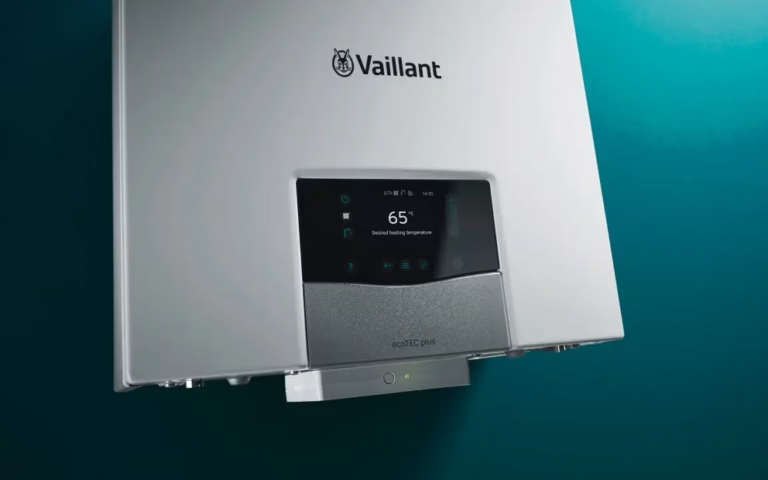
Smart thermostats are just the beginning. By 2026, boiler systems will increasingly use AI-driven learning technology to optimise heating automatically.
These systems can:
- Learn your daily routine
- Adjust heating based on weather forecasts
- Detect inefficiencies early
- Reduce unnecessary energy use
This level of automation improves comfort while cutting heating costs — a key trend in boiler technology for 2026.
3. Greater Focus on Energy Efficiency
Energy efficiency remains a top priority. New boilers are being engineered to operate closer to their maximum efficiency at all times, rather than only under ideal conditions.
Expect improvements such as:
- Better heat exchangers
- Improved modulation (adjusting output more precisely)
- Reduced standby energy loss
This means lower gas usage, reduced bills, and better environmental performance.
Annual boiler servicing will remain essential to maintain these efficiency gains.
4. Seamless Integration with Renewable Technologies
Boilers in 2026 won’t operate in isolation. Instead, they’ll work alongside renewable technologies such as:
- Solar thermal systems
- Hybrid heat pump setups
- Smart energy monitoring platforms
Hybrid systems — combining a boiler with a heat pump — are expected to grow rapidly, offering flexibility and reduced emissions without sacrificing reliability.
5. Remote Diagnostics & Predictive Maintenance
One of the most practical future boiler tech advances is remote diagnostics.
Modern boilers can already transmit performance data, but by 2026 this will expand to:
- Predicting component failure before breakdowns occur
- Remote fault detection by engineers
- Faster, more accurate repairs
This reduces downtime and prevents emergency breakdowns — especially during winter.
If your boiler is ageing, proactive checks via boiler repairs may soon be replaced by predictive servicing.
6. Quieter, More Compact Designs
Manufacturers are focusing on making boilers:
- Smaller and more space-efficient
- Significantly quieter during operation
- Easier to install in cupboards or utility spaces
This trend suits modern homes where space is limited and aesthetics matter.
7. Tighter Regulations & Environmental Standards
Government regulations will continue to shape boiler design. By 2026, expect stricter efficiency and emissions standards — pushing manufacturers toward cleaner, smarter technology.
While gas boilers aren’t being banned, they are evolving rapidly to align with the UK’s net-zero targets.
This means homeowners installing boilers now should consider future-ready models rather than older designs.
Frequently Asked Questions
Will gas boilers still be allowed in 2026?
Yes. Gas boilers will still be legal, especially hydrogen-ready and high-efficiency models.
Should I wait until 2026 to replace my boiler?
Not necessarily. If your boiler is unreliable or inefficient, upgrading now to a modern, future-ready system can still be the best option.
Are hydrogen boilers available yet?
Hydrogen-ready boilers are available now, but full hydrogen networks are still in development.
Will smart boilers really save money?
Yes — smart controls and adaptive technology can significantly reduce wasted energy.
Do older boilers support new smart tech?
Some do, but many older systems are limited. A new installation offers the best compatibility.
Conclusion
Boiler technology in 2026 is all about efficiency, intelligence, and future-proofing. From hydrogen-ready systems to AI-powered controls and renewable integration, heating systems are becoming smarter and more sustainable than ever.
At Lock & Lindfield, we help homeowners across West Sussex choose heating solutions that make sense today — and tomorrow.
Contact our team today to discuss upgrading your boiler.