
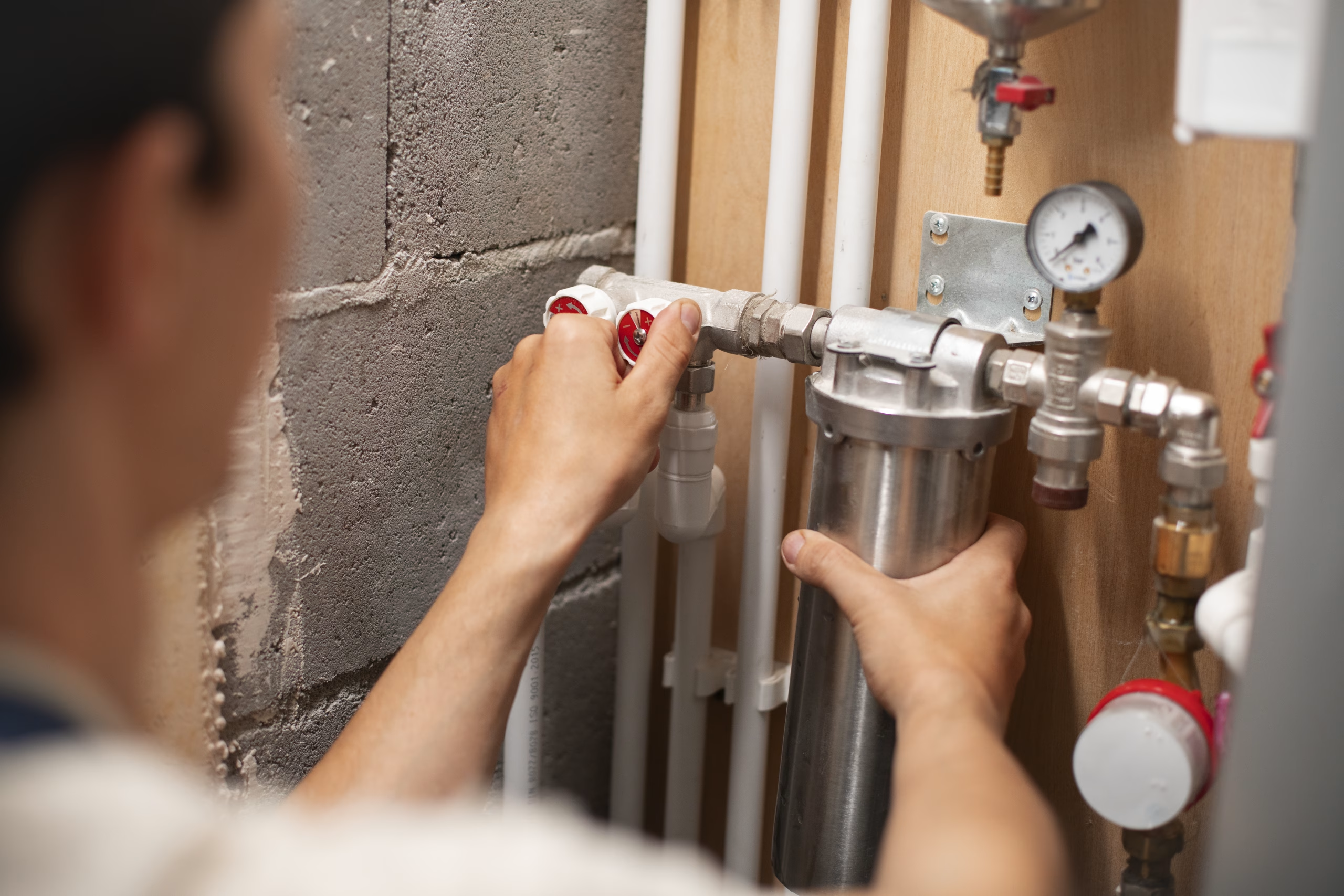
If your boiler keeps losing pressure, the most likely cause is a small leak somewhere in the central heating system, though a recently bled radiator, a worn pressure relief valve or a failing expansion vessel can produce exactly the same symptom. Topping the pressure back up will usually get your heating working again for a day or two. If it keeps dropping back down, that’s a sign something needs fixing rather than refilling.
What Should Your Boiler Pressure Actually Be?
Most domestic boilers are designed to run somewhere between 0.7 and 2.5 bar, which lets the system supply water to your radiators and hot water outlets without straining any of the components Vaillant explains. In practice, you’re aiming for a narrower window than that. With the heating off and the system cold, the gauge should sit between 1 and 1.5 bar. Once the heating fires up, the water expands and the reading climbs slightly, usually to somewhere around 2 bar, before settling back down again according to Ideal Heating. Most gauges mark this ideal range in green, so if the needle sits outside it, in the red, that’s your cue to investigate.
Signs Your Boiler Pressure Has Dropped
A handful of everyday symptoms usually point to low pressure before you’ve even looked at the gauge:
- The hot tap runs, but the water never really warms up
- Radiators stay lukewarm or cold even with the heating on
- The boiler locks out completely or displays a fault code
These are the warning signs we point to when trying to work out whether pressure is behind a heating problem. A quick check of the gauge will usually confirm it one way or the other.
What Causes a Boiler to Keep Losing Pressure?
You’ve Recently Bled a Radiator
Bleeding a radiator releases trapped air, and a bit of water escapes with it, which lowers the system pressure. This is completely normal and just needs a small top up afterwards. If you’re not sure how to do this safely, our guide on how to bleed radiators walks through the process step by step. What it won’t do is fix a pressure problem that’s already there. Bleeding a radiator only ever removes pressure, it never adds it.
A Leak Somewhere in the System
This is the most common reason a boiler keeps losing pressure, and also the hardest to pin down, since the leak could be anywhere across the network of pipes and radiators in your home. Leaks tend to develop at the weakest points first, particularly joints, valves and fittings. Look out for discolouration, staining, bubbling paint or rust marks around radiators and visible pipework. Sometimes there’s no obvious puddle at all, especially with a slow leak, so a clean patch of floor surrounded by dust, or a damp patch on a ceiling, can be just as telling.
A Leak Inside the Boiler Itself
If there’s no sign of a leak anywhere else, the problem may be inside the boiler unit. A worn pressure relief valve is a common culprit here. Its job is to release water if the pressure gets too high, but if it wears out it can start leaking on its own, usually visible as a drip from the outlet pipe on an external wall behind the boiler. There are broadly two ways a boiler can lose pressure internally, either water is escaping somewhere in the system, or a component like the expansion valve has failed and damaged the pressure relief valve in the process, as Viessmann sets out. Either way, this isn’t something to open up and investigate yourself, it needs a Gas Safe engineer.
A Failing Expansion Vessel
Every pressurised heating system has an expansion vessel, a small tank with a rubber diaphragm inside that absorbs the natural rise and fall of pressure as water heats and cools. If that diaphragm splits or tears, water fills the space meant for air and the system pressure drops, often quite suddenly and without any visible leak anywhere else as Ideal Heating explains. A sudden, unexplained drop with no puddles or staining anywhere is a fairly strong hint that the expansion vessel is worth checking.
Diluted Inhibitor or Trapped Gas
Central heating water is dosed with a chemical inhibitor that slows down corrosion inside the radiators and pipework. When that inhibitor becomes too diluted, usually from repeatedly topping the system up with plain mains water, the reaction between water and metal speeds up again, releasing gas that builds up inside the system and gradually pushes water out. Bleeding the radiators will relieve it temporarily, but the underlying fix is a proper power flush and re-dose of inhibitor.
Pump Problems
The pump that circulates water around your system needs to run at the correct speed. Set too high, it can draw air into the water flow, which contributes to the same pressure problems described above. A pump that’s simply wearing out, running hot to the touch or circulating lukewarm water, can also struggle to maintain pressure properly. Both are jobs for an engineer to diagnose and set correctly, rather than something to adjust yourself.
How to Repressurise Your Boiler Safely
If you’ve checked for obvious leaks and just need to top the system back up, most boilers can be repressurised in a few minutes using the filling loop, the braided hose that connects your heating system to the cold mains.
- Turn the boiler off and let it cool down completely before you start
- Locate the filling loop and check both ends are securely attached
- Open the valves slowly to let cold water into the system, keeping an eye on the gauge
- Once the needle reaches the green zone, around 1 to 1.5 bar, close both valves
- Turn the boiler back on, pressing reset if your model needs it
Keep half an eye on the gauge over the next day or two. A slight settle is normal, but if the pressure keeps sliding back down, repressurising has only masked the problem rather than solved it.
When to Call a Gas Safe Engineer
Repressurising is a fine short term fix, but if you find yourself doing it every few days, or the pressure drops noticeably fast, it’s time to get a professional involved rather than keep topping up. That’s especially true if you’ve spotted damp patches, green corrosion deposits on pipework, or a drip from the pressure relief valve outlet outside. Our team handles boiler repairs across Worthing, Chichester, Littlehampton, Bognor Regis, Storrington and the wider West Sussex area, and can usually get to the bottom of a recurring pressure drop on the first visit.
Is a Low Pressure Boiler Dangerous?
In most cases, no. Low boiler pressure isn’t dangerous in itself, though it will stop your boiler heating your home and water properly, and if it falls far enough the boiler will usually shut itself down and display an error code as a safety measure. The bigger risk is ignoring a repeated pressure drop for months on end, since whatever’s causing it, whether that’s a slow leak or a failing component, tends to get worse rather than better on its own.
Stopping Pressure Problems Before They Start
An annual boiler service is the best way to catch a worn pressure relief valve, a tired expansion vessel or an early leak before it turns into a breakdown. Our boiler servicing covers exactly this kind of check across all the makes and models we work with. If your boiler is getting older and pressure problems keep coming back despite repairs, it might also be worth reading our guide on whether to repair or replace your boiler to weigh up the options properly. And if the pressure drops seem to worsen specifically once the weather turns cold, we’ve also covered why boilers lose pressure in cold weather in more detail.
FAQs
Is it normal for my boiler to lose a little pressure over time?
Yes. A slow, gradual drop is normal, particularly after bleeding a radiator, and just needs an occasional top up. It’s a rapid drop, or pressure that keeps returning to the same low reading within days, that points to a leak or a faulty component worth investigating.
Can I repressurise my boiler myself?
In most cases yes, using the filling loop as described above. It’s a routine job most homeowners can do safely. Just bear in mind that repressurising tops the system up, it doesn’t fix whatever caused the drop in the first place.
Will bleeding my radiators fix low boiler pressure?
No, it does the opposite. Bleeding a radiator releases air and a small amount of water, which lowers the pressure rather than raising it. If your pressure is already low, bleed the radiator if it needs it, then repressurise the system afterwards.
My boiler pressure has dropped but I can’t find a leak. What now?
Not every leak is visible. It could be inside the boiler itself, in the expansion vessel, or hidden under floorboards or inside a wall. If you’ve checked the obvious spots and come up empty, it’s worth getting a Gas Safe engineer to take a proper look rather than repeatedly topping the system up.
Why does my boiler seem to lose pressure more in winter?
Cold weather makes pipework and fittings contract slightly, which can expose small leaks that weren’t noticeable in warmer months, and the system also runs harder and more often. We’ve covered this in more depth in our guide to boiler pressure in cold weather, linked above.


